Signal sighting testing capabilities
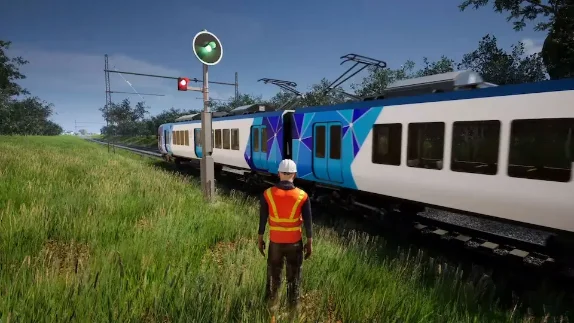
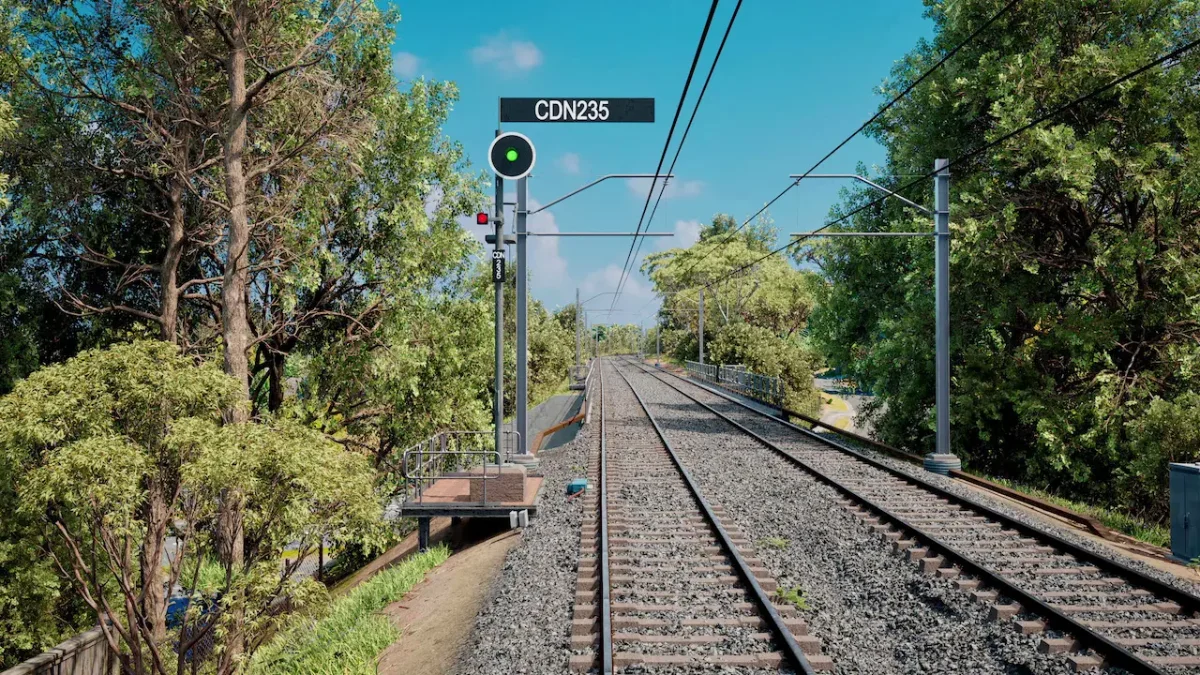
Prism Vis offers a service which leverages 3D environments to ensure that signals are placed in the right location for driver observation and safe rail operations.
It enhances the existing signal sighting methodology used by signalling authorities. It saves significant cost of activities prior to/during installation and enables rapid decisions and sign-off by authorities.
Enhancing and supporting the design, validation and approval process of the signal sighting arrangement plan. Providing the ability to view a Signalling Arrangement Plan, within an accurate 3D virtual environment, of a project area, contributing to getting signalling designs correct the first time. Avoiding rework and waste. Complemented by a defined workflow which results in impactful, time efficient and beneficial outcomes with the ability for discrepancies to be identified through the review workshops and rectified in an open, interactive and real-time environment.
Challenge
Placing a signal in the wrong location is very costly. It creates rework and waste which can include hardware costs of $50,000 (approx.) and earthwork costs of $30,000 (approx.) per signal (estimate). Other costs can include RIM/RSO representatives (assumption of minimum 2 x RSO involved) $8,000 (approx.) per day (variable by RIM/RSO) and PO costs of $2000 (approx.) per day.
Furthermore delays for planned commissioning of new signals which flows on to more efficient train running can be significant e.g. associated costs for commissioning and decommissioning.
Solution
We provide a structured approach to help with the design, validation and approval of signalling arrangement plans. The three stages of our process are; 1) 3D virtual environment creation, 2) Signalling Arrangement Design Validation Workshops and; 3) Signalling Arrangement Design Preliminary Approval Workshops.
3D virtual environment creation
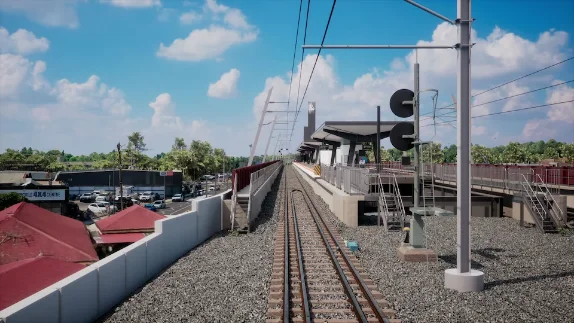
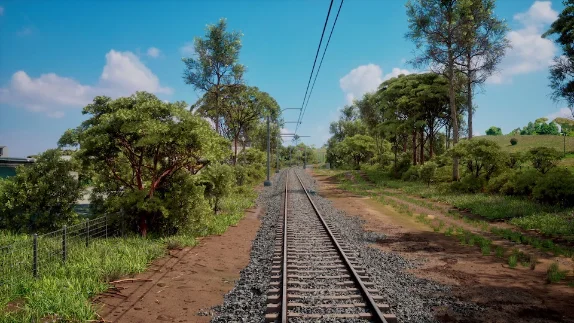
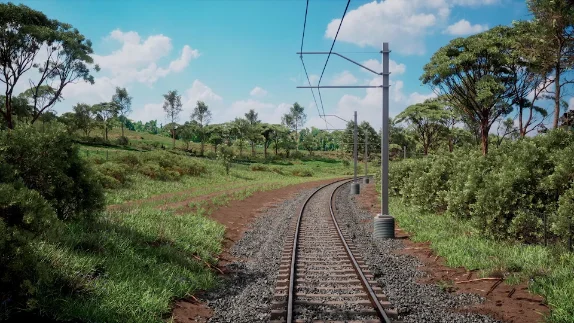
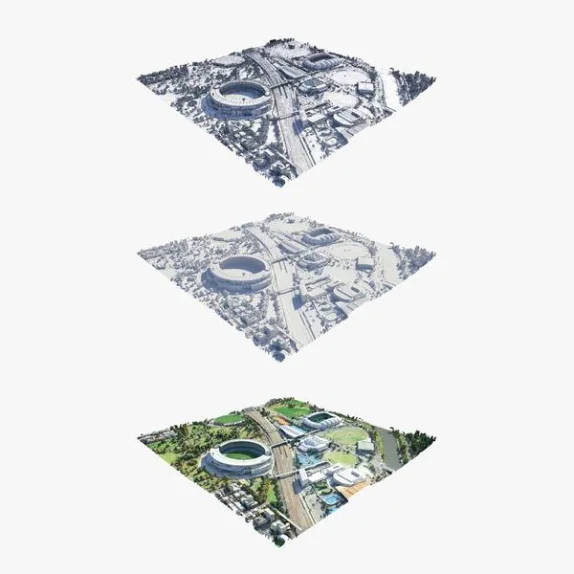
Utilising such data as a base model greatly enhances the process as it allows for viewing the Signalling Arrangement Design within real world existing conditions. This provides additional rigour to the process, as it is possible to test sightlines which factor in impacts of trees and other elements along the rail corridor.
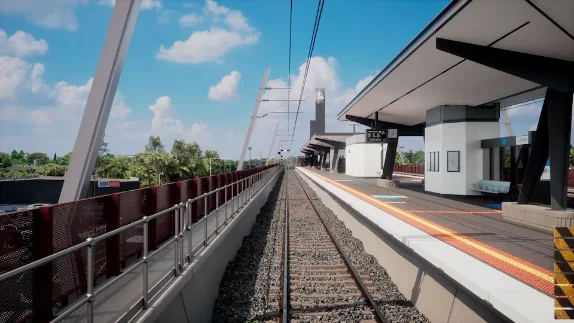
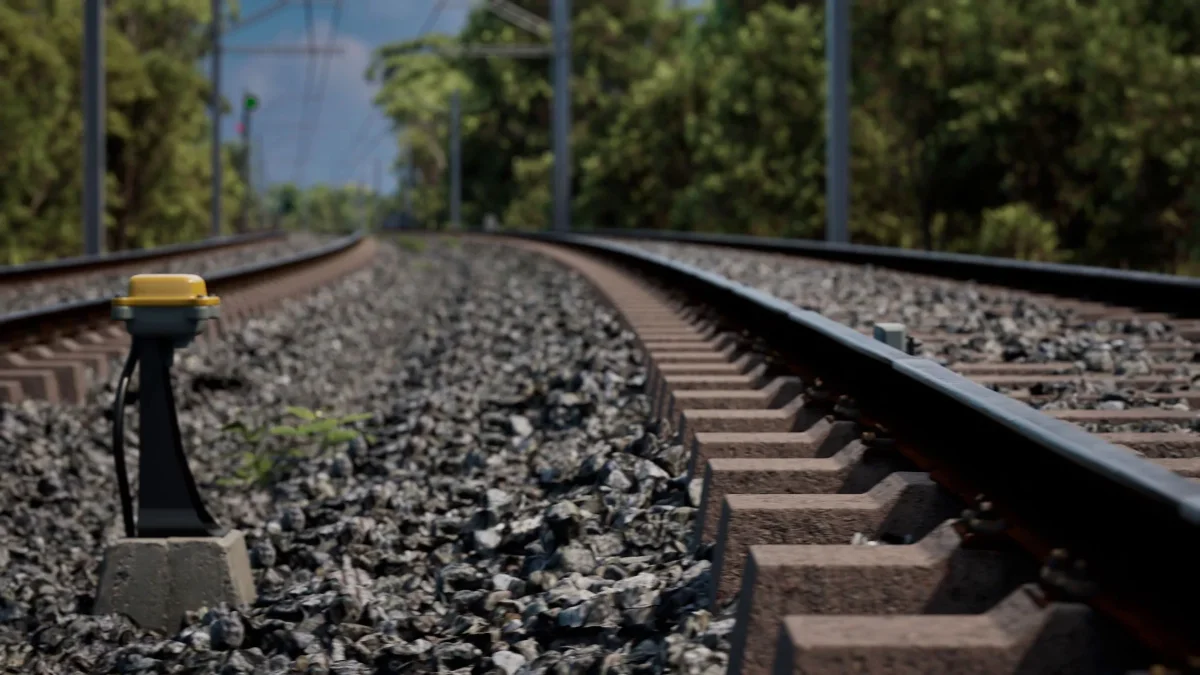
Design models are created from data sets provided by designers. All elements within the rail corridor are modelled to a high level of detail; these include rail track and earthworks, train station, sub-stations, overhead structures, overhead wires etc.
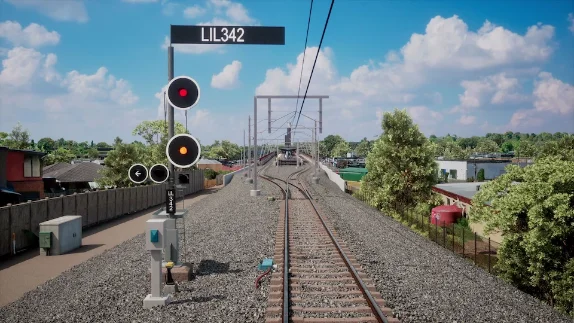
Using the chainages provided by a Signalling Design Team we are able to incorporate all signals within the 3D virtual environment. All signals are labelled, and geo located. The signal types are modelled based on standard technical drawings to ensure their accuracy and scale. A catalogue of different signal types has been developed to be able to be dropped into the 3D virtual environment. We are able to interactively reposition the signals once they have been introduced into the 3D virtual environment.
Signalling Arrangement Design Validation Workshops
Once the 3D virtual environment is developed we run a series of Workshops conducted with the Signalling Design Team to support them validating the Signalling Arrangement Design. During which we are able to quickly view each signal from a train driver's viewpoint at a distance equivalent to 10 seconds and 6 seconds from each signal. If issues are detected, quick adjustments are made interactively moving signals in 3D to explore possible alternative solutions.
Signalling Arrangement Design Approval Workshops
The workflow also can support the Signalling Arrangement Plan external review workshops attended by Signal Sighting Committee Members. By reviewing visuals from a train drivers' perspective at 10 seconds and 6 seconds respectively from each signal in real time, we are able to identify and rectify any discrepancies on the spot. Once completed the train driver perspective images are provided to the Signalling Design Team which are can be included in the Signalling Arrangement Plan Report submitted to the Signalling Committee. A flythrough video was also provided to support the submission.
Results
Our capabilities to enhance and support the design, validation and approval process of the signal sighting arrangement plan provides faster approvals, cost reductions, more informed and collaborative decisions and fast and efficient training. It offers more informed & collaborative decisions because all stakeholders are in the room (Skype or video conference used as required), evaluating the signal placements in context and in real time immediate adjustments to signal placement. The structured process allowed for the Signalling Arrangement Design to progress through iterative review, revision and approval cycles resulting in fewer issues being identified for each subsequent meeting. The combination of key personnel, consistent visual reference, realtime ability to modify the design and understand the differences allowed for more informed and confident decisions to be made by all parties.
If you are preparing for a bid or already in delivery and want an alternative that is experienced, trusted by the industry and competitive we are happy to have a chat.
Back